A Short-Day Visit to a Village Sports Ground
Plan a short-day visit to a village sports ground around daylight, warm layers and a clear return route, so you can explore without rushing towards dusk.
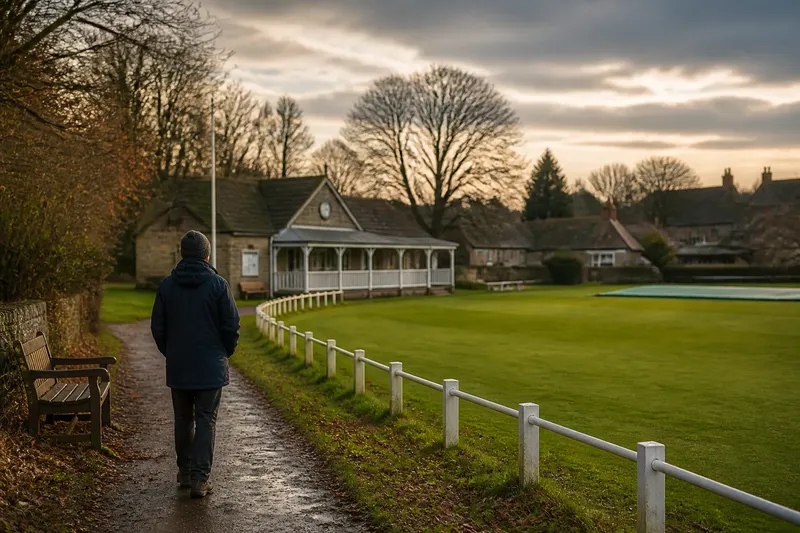
A short-day visit to a village sports ground should be planned around daylight and a clear way home. On a winter afternoon, a little time to arrive, look around and pause can make the ground feel welcoming without turning the outing into a tight schedule.
Imagine you are planning a Saturday visit to a village cricket ground in late winter. There is a pavilion, a boundary path and a small practice area, but no match is scheduled. You want to see the place, perhaps have a warm drink nearby and be home before dusk. Make the visit about one thing: understanding how the ground and its surroundings fit together.
What should the visit be for?
Choose a simple aim before setting off. You might want to find the pavilion entrance, see the ground in its winter setting or learn where public footpaths meet the playing area. One clear aim gives the visit shape without making every minute answer to a timetable.
For this invented outing, the aim is to follow the public path around the edge of the cricket ground. The visitor checks whether casual access is permitted and whether a club event is taking place. If access is unclear, they contact the club rather than assume that an open gate means every area is public.
Keep the plan modest. A ground may be quiet, damp or partly closed in winter, and there is no need to add another destination simply to fill the afternoon.
How should daylight shape a short-day visit?
Arrive while there is enough daylight for a relaxed look around, rather than reaching the ground as the light is already fading. Check the local sunset time on the day and leave a comfortable margin for the return to your car, bus stop or village centre. Cloud, trees and buildings can make a route feel dim well before sunset.
In the imagined plan, the visitor arrives in the early afternoon and chooses a point at which to turn back while the path is still clearly visible. It is a cue to head towards the exit, not a deadline to finish a circuit. If the ground is larger than expected or the path is muddy, they can shorten the visit and return by the route they know.
Check the return journey before leaving home, too. Rural buses may run less often at weekends, so confirm the service you plan to use. If the only way back involves an unlit lane, choose a route that can be completed in daylight or arrange another way home; do not rely on a torch to make a dark walk suitable.
What should you wear and carry?
Dress for standing still as well as walking. A warm base layer, a jumper or fleece, and a wind-resistant outer coat are easier to adapt than one heavy layer. Add gloves and a hat if the forecast calls for them, and choose footwear with grip for wet grass or muddy paths.
- Check the forecast for rain and wind; if either is likely, wear a weather-resistant coat, otherwise choose outerwear suited to the milder conditions.
- Look at the route surface and your footwear; if it may be wet or muddy, wear shoes with grip that can be cleaned afterwards, otherwise ordinary comfortable walking shoes may be enough.
- Consider whether you will stop for a while; if cold hands would make that uncomfortable, pack gloves, otherwise leave the spare pair at home.
- Check whether the route might take longer than planned; if an unexpected delay could leave you in low light, carry a small torch but still turn back before dark, otherwise avoid adding unnecessary kit.
- Check what personal essentials you need; if you require water or medication, take it with you, otherwise keep your bag light.
- Check whether a hot drink is central to the outing; if it is, confirm that a nearby café or village shop is open, otherwise treat a stop as optional and follow the return route.
For the fictional visitor, a waterproof coat and sturdy walking shoes matter more than specialist sports clothing. They may move slowly and pause by the pavilion, so warmth while standing matters. A bulky bag of spare kit is not worth the effort for a short, straightforward walk.
What is worth noticing at the ground?
Start at the entrance. Check where the public route runs, which gates are marked for club use and whether signs identify restricted areas. Then follow the permitted path at an unhurried pace. Notice how the pavilion faces the ground, where spectators might stand during a match and how paths connect the playing space to the village.
In the imagined visit, the visitor sees a notice by the pavilion, a narrow path along one side of the boundary and a bench sheltered from the wind. These details help them picture how the ground might be used on a match day. They stay on public paths and do not enter the playing area or club rooms.
A quiet visit can also reveal seasonal changes. Bare branches may open a view across the boundary, while wet leaves gather where people usually walk. Pay attention to anything that affects the route or the feel of the ground; there is no need to collect every detail.
What should you check before you set off?
Is the ground open to visitors?
Look for a club notice, public access information or a clearly marked visitor route. If access is uncertain, ask the club before entering; if the club confirms a public route, stick to it, otherwise choose another place to walk.
What should you wear for a short winter walk?
Choose warm layers, a weather-resistant coat and footwear with grip for damp paths. If the forecast suggests rain or wind, add suitable protection; if conditions are mild and dry, avoid carrying heavy extra layers.
How much time should you leave for looking around?
Allow enough time to follow one simple route and pause without rushing towards dusk. If the light fades or the ground is difficult underfoot, turn back early; otherwise continue only while the return remains comfortable.
What if there is no match or club activity?
A quiet ground still offers paths, entrances and a view of how the pavilion sits beside the playing area. If there is no event, treat the visit as a chance to see the setting; if the site is closed, do not try to get in and choose another stop instead.
How can you leave room for a pause?
Build in the option to stop, rather than assigning a fixed duration. If the bench is sheltered and the light is good, pause there. If rain arrives or the path feels slick, shorten the loop and head back. Let conditions shape the visit without turning every change into a problem.
Say the visitor reaches the far side of the ground and notices the clouds have thickened. They skip the lane beyond the boundary, pause briefly at the sheltered bench, then return by the route they already know. The result is a shorter, calmer outing that still gives them a clear sense of the ground.
For warmth afterwards, consider a nearby café or village shop only if it fits the return route and is open. Check its opening hours before setting off if a hot drink is central to the plan; otherwise, keep the stop optional.
What can you take away from the visit?
In the imagined outing, the visitor returns knowing where the entrance is, which path is public and where there is shelter from the wind. They have not tried to see every corner or needed a fixture to make the journey worthwhile. That practical knowledge can make a future visit easier to plan.
For a short-day visit to a village sports ground, the useful approach is simple: plan around the light, dress for pauses as well as movement, and keep a safe return route in view. Before leaving, check that your transport or walking route still works for the conditions; that small decision matters more than squeezing in one last look around.