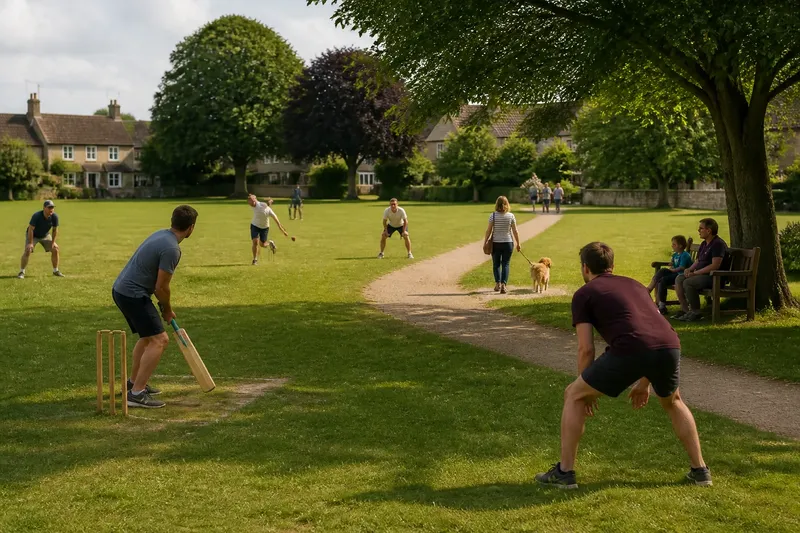
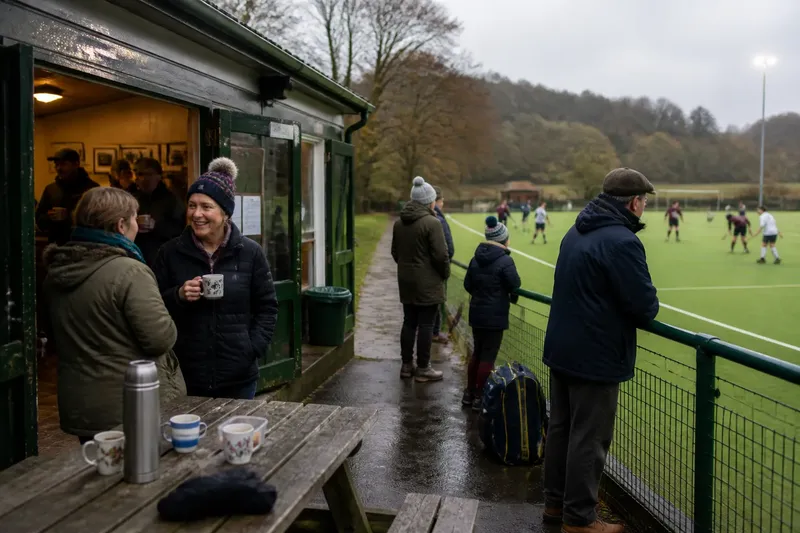
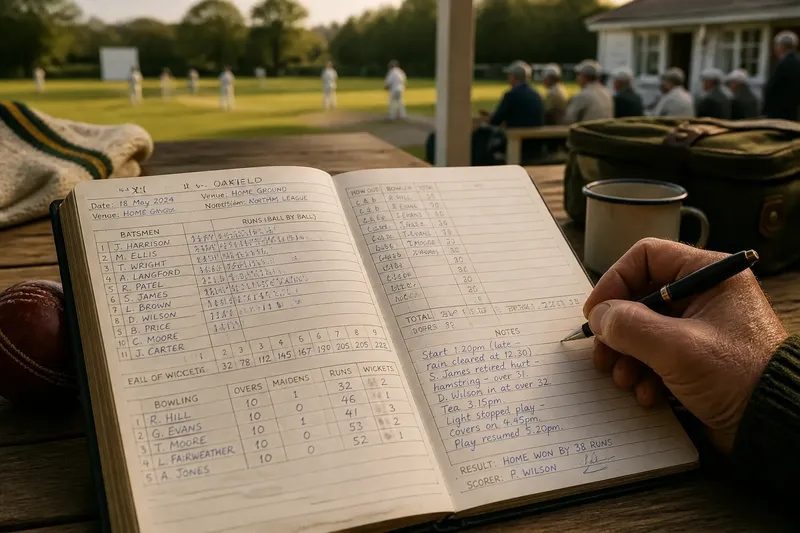
The Myth of the Perfect Playing Field
The perfect playing field need not be uniform: learn how to assess useful space, work with local quirks and keep a rural ground distinctive.
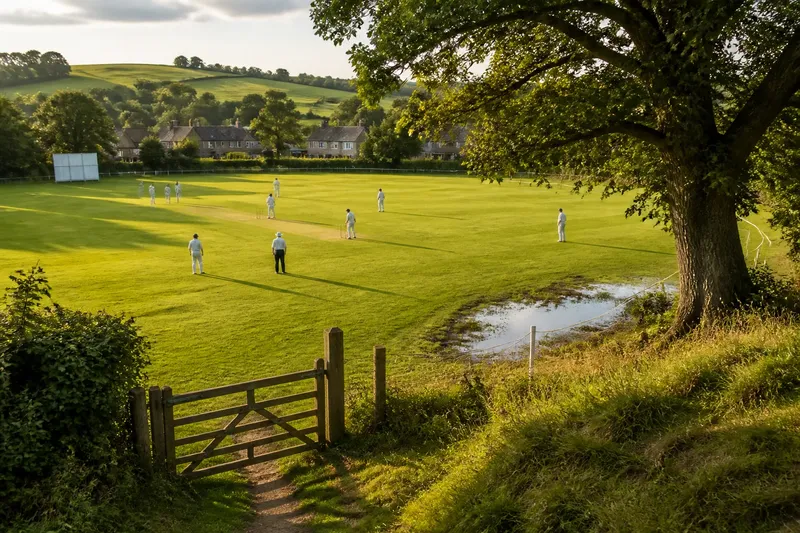
The perfect playing field does not need an even surface from boundary to boundary. A village ground can be dependable where play happens and still keep the slope, tree line, old gate or damp corner that gives it a sense of place. The useful question is not whether every part looks alike, but whether players can use the ground safely and predictably for the sport being played.
That distinction is easier to maintain when the club treats the ground as a working place rather than a blank canvas. A week of ordinary inspection and care can reveal which irregularities need attention, which can be managed with clear local rules, and which are simply part of the landscape. The aim is a playable space with character, not a uniform surface at any cost.
What makes a playing field useful?
Useful space is the portion of the ground that supports the game as it is actually played. Its shape depends on the sport, the age and ability of the players, the equipment in use and the conditions on the day. A broad outfield may matter to one club; clear run-off space or a firm approach may matter more to another.
Start by identifying the active area and the routes people take into it. Look at where players run, turn, jump, retrieve equipment and wait for their turn. Include the path from the entrance to the playing area, the space beside the boundary and any route used by spectators or grounds staff. A surface can appear spacious while a tree root, muddy crossing or narrow gate makes an important movement awkward.
Then separate three kinds of feature:
- Essential playing space: the area needed for the game and its normal movement.
- Manageable variation: a slope, patch of shade or change in firmness that players can account for with sensible boundaries or a change of use.
- Obstruction or hazard: a feature that creates an unreasonable risk, blocks access or makes play unpredictable in a way the club cannot manage.
This is not a claim that a charming ground is automatically suitable. It is a way to avoid treating every visible difference as a defect. If an issue affects safety or the rules of a particular competition, the club should consult the relevant governing body, a qualified grounds professional or the responsible local authority as appropriate.
How can a club judge an uneven ground?
Use the same route through the decision each time, so a memorable complaint does not become the only evidence. Walk the playing area in ordinary conditions and after the weather that most changes it. Notice the change between dry and damp ground, the effect of shade, and whether the trouble lies where people play or only in a part that can be kept out of use.
Watch movement rather than judging only by appearance. A shallow dip might be harmless in a quiet corner but awkward where players accelerate. A firm patch could be useful for access yet unsuitable for a different activity. If the ground is used by more than one sport, ask each group what they need and what boundaries they already follow.
Say a village club has a gentle cross-slope, a mature oak near one edge and a low patch that holds water after rain. The grounds volunteer marks the active area, asks players to observe how the slope affects play, and keeps the wet corner outside the usable boundary until it has drained. The expected result is a clearer account of where the ground works and which limits need to be communicated, without assuming that the oak or slope must be removed.
Keep a simple note of what was observed, where it occurred and what decision followed. A sketch on a paper plan can be more useful than vague labels such as “rough” or “bad”. Record an agreed boundary, a temporary closure or a request for specialist advice; do not turn the record into an elaborate survey unless the club has a reason to commission one.
What should the club do through a normal week?
A short routine makes decisions easier to revisit. Choose timings that fit the club’s use, weather and available volunteers rather than forcing every ground into the same schedule.
- At the start of the week: check the forecast and the club calendar. Note which activity will use the ground and whether a match, training session or community event changes the usual footprint.
- Before the first use: walk the active area and access route. Look for standing water, newly exposed roots, debris, damaged posts or other changes since the previous session. Close off any area that cannot be used sensibly.
- After heavy rain or a change in conditions: check the affected places again before play. Do not rely on a dry-looking surface at the entrance if the playing area remains soft or slippery.
- During the week: ask players and grounds volunteers for specific observations. “The turn near the north side felt slippery” is more useful than “the field is poor”.
- At the end of the week: review temporary limits and decide whether they can be lifted, need to remain, or call for qualified advice. Tell the next group using the ground what has changed.
Keep the routine proportionate. A club does not need to inspect every inch before every casual gathering, but it should not assume that a familiar field has stayed unchanged. Heavy rain, a fallen branch, maintenance work or a change in use can alter a small but important part of the ground.
Which irregularities can remain?
Some features are part of a ground’s identity and do not interfere with its useful space. A slight rise, a line of older trees or a boundary that follows the edge of a village can make the setting recognisable. Retaining them is a sound choice when the active area remains clear, the feature is understood by players and no local rule requires a different arrangement.
Other irregularities are manageable only with a deliberate decision. A shaded strip may stay damp, so the club might keep it outside the playing boundary during wet spells. A narrow entrance may require equipment to be carried along a particular route. A sloping edge could call for a clear local boundary so that players know where the usable area ends. These are practical arrangements, not proof that the ground has failed.
What is not worth the effort is levelling a distant corner simply because it looks different in a photograph, or mowing every edge to the same finish when those areas are not used. Work should address a playing need, access need or maintenance problem. Otherwise, it can remove a useful feature while adding a burden the club cannot sustain.
What questions should the club settle before changing the ground?
Does a slope always need correcting?
No. First establish whether it affects the active area, movement or fair play for the sport in question. If it does not, a clear boundary may be more appropriate than altering the whole surface.
Can an awkward corner simply be closed?
Sometimes, if enough usable space remains and players can see and follow the limit. Check the rules for the sport and the needs of scheduled fixtures before relying on a local boundary.
Who should assess a recurring surface problem?
Ask a qualified grounds professional or the relevant sporting body when a recurring issue affects safe use, drainage or competition requirements. A volunteer’s observations can help describe the problem, but they are not a substitute for specialist advice where that is needed.
How should the club explain a local quirk?
Tell players plainly before use, mark the boundary where practical and include the reason in the club’s ground notes. A short, consistent explanation is better than leaving newcomers to discover the feature during play.
How can the ground keep its character?
Make changes in response to a defined problem and preserve what is outside that problem. If one muddy route causes difficulty, improve or redirect that route rather than reshaping an entire field. If a boundary tree is a concern, obtain competent advice about that tree rather than treating the whole edge as an obstacle. Where the right treatment depends on a product label, manufacturer instructions or local rules, follow those requirements once the club has identified the relevant work.
Involve the people who know the ground in different ways. A long-standing grounds volunteer may know where water collects; a newer player may spot that a boundary is hard to read; a coach may know which movement needs more room. Those observations can be considered together without allowing any single preference to dictate the whole site.
Keep the useful area clear, make local limits easy to understand and care for distinctive features that do not obstruct play. That is a more practical standard than uniformity. The perfect playing field is the one a club can use, explain and maintain while still recognising it as its own.