The Club Scorebook Before the Spreadsheet
A club scorebook preserves more than the result: learn what to record, how small details recover the shape of a match and why they matter later.
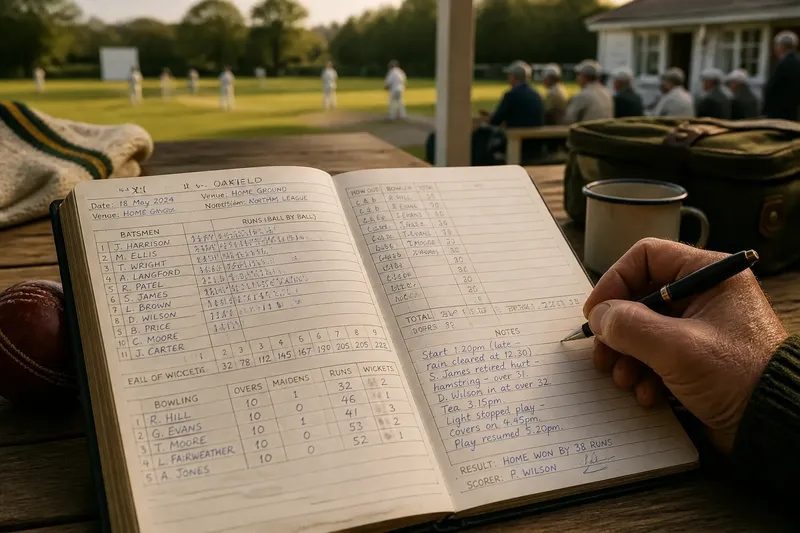
A club scorebook preserves the shape of a match, not just its result. Before a spreadsheet can sort totals or compare seasons, a handwritten page can show who played, how the afternoon unfolded and which small moments became part of club memory.
That extra value comes from the way the book is used. A scorekeeper is recording events as they happen, often in the company of players and spectators who know the ground, the weather and the people involved. The result is a working record with context that a bare list of figures cannot supply.
What does a scorebook record beyond the result?
The score is the spine of the page, but it is not the whole story. Depending on the sport, a book might include the teams, the order of play, changes in who was taking part, and notes about interruptions or unusual events. These details help a future reader understand how a result came about.
In cricket, for instance, a scorebook can show which batter was at the crease when a partnership developed, or when a bowler changed ends. In bowls or a village tournament, a club record may instead note the rink, the draw, the people who stepped in, and how a match was settled. The useful detail is whatever helps the club reconstruct the occasion, not whatever makes the page look busiest.
Handwriting also leaves room for a brief note that has no neat column: a late start after rain, a player leaving early, or a match paused while the ground was cleared. The note should clarify the record rather than turn it into a diary. A few plain words can explain an odd entry years later.
How should a scorekeeper make the page useful?
Start with a consistent heading. Write the fixture or event, the date, the venue and the sides involved before play begins. Add the names in the order the book requires, and leave enough space to correct an entry legibly. If the club uses a particular scoring convention, follow it consistently so the next person can read the page without guessing.
During play, record events close to when they happen. If you miss a detail, ask a teammate or official rather than filling the gap from memory at the end. Keep corrections visible: a single line through an error is easier to interpret than an overwritten figure. If a note needs explanation, put it in the margin and connect it clearly to the relevant entry.
- Identify the occasion: record the fixture, competition or friendly, plus the venue.
- Name the participants: use names rather than relying on shirt numbers or nicknames alone.
- Keep the sequence clear: enter play in order and mark any interruption that changes the order.
- Explain unusual entries: add a short note when a substitution, abandonment or scoring correction might otherwise puzzle a reader.
- Complete the record: add the final result and the names of the scorer or recorder if club practice calls for them.
- Check before filing: compare the written result with the agreed result and make sure the page can be read without verbal explanation.
Say a village cricket fixture ends with an unfamiliar name in the bowling column because a player had to leave early. The scorer notes the change beside the relevant over and adds a short explanation after the innings. A future committee member can then distinguish a genuine change in the match from a copying error, without asking someone to remember the afternoon.
Why do the small notes matter later?
Club records are often consulted for practical reasons: preparing a fixture programme, checking who took part, settling a question about a competition or recognising a long-standing volunteer. A scorebook can answer these questions while also showing the ordinary texture of club life. It may record that a junior was brought into a senior side, that a regular scorer kept the book for years, or that a fixture was completed despite a late interruption.
Those traces are most valuable when they are accurate and restrained. A scorekeeper should not turn an uncertain recollection into a fact, or use the page to settle personal disputes. If a detail is disputed, mark it as uncertain or leave it out. The book is a shared club record, not a private verdict on the people who played.
Some detail is not worth the effort. There is little point recording every bit of sideline conversation or adding decorative commentary that no later reader can verify. A useful note is brief, connected to the play and clear enough to explain why the record looks as it does.
How can a club keep the record accessible?
Use a sturdy book that opens flat, a pen that does not smudge easily and a folder or cover that protects pages from damp. Keep the scorebook in a known place after the match, and make filing part of the scorer’s usual close-out routine. If a page is especially important, a clear scan can help people consult it without handling the original, but it should not replace the club’s own record-keeping habits.
Agree a simple naming convention for later copies: include the season or playing year, team and fixture. That makes a digital index easier to search without trying to replace the detail on the page. Where the club is unsure about access, retention or personal information, follow its own policy and applicable local rules.
What do readers often ask about club scorebooks?
Should every match go in the scorebook?
That depends on the club’s customs and the purpose of the book. A consistent record of representative fixtures is more useful than an ambitious system that nobody keeps up.
Can a spreadsheet replace the handwritten record?
A spreadsheet can make totals and searches easier, while a paper book captures the original sequence and marginal notes. Clubs can use both, provided the copy is checked against the record and the original has a safe home.
What if the scorer makes a mistake?
Correct it plainly rather than disguising the original entry. If the correction changes the result or meaning of the page, note who confirmed it and why, following the club’s established practice.
Who should look after old scorebooks?
The club should name a responsible officer or committee role and tell members where the books are kept. A clear handover prevents a record from becoming dependent on one person’s memory or cupboard.
What does a handwritten record leave behind?
The spreadsheet is good at making information sortable; the scorebook is good at keeping play in its original order, with enough room for the detail that gives a result meaning. That is why the club scorebook remains useful even when figures are copied elsewhere: it connects the result to the people, interruptions and decisions that made it.
Write each page for the next reader as well as the scorer at the table. A clear heading, a faithful sequence and one useful explanation can turn an ordinary match record into a piece of club memory that still makes sense when nobody present remembers the afternoon.