Pavilion First or Touchline First?
Pavilion first or touchline first? See how the order of arrival shapes greetings, tea, scorekeeping and conversation at a village fixture.
Pavilion first or touchline first? The order a club gathering begins in can shape the whole visit: who gets greeted, where conversation settles and how people find their way into watching. Neither choice is inherently better. A pavilion-first gathering gives the club room to welcome people before play takes over; a touchline-first gathering lets the fixture set the pace from the start.
These are not rival systems to enforce. Weather, access, the match schedule and the people present all matter. The useful question is what sort of welcome suits this particular day, and how small customs can help newcomers join without being made to feel they have missed a cue.
1. What does a pavilion-first gathering make possible?
Starting in the pavilion gives people a clear place to arrive. They can put down a coat, find a familiar face and work out what is happening before choosing where to watch. For a club with a modest room, a few chairs and a tea table, that simple pause can make arrival feel less like walking into the middle of a matchday conversation.
The room also gives club members a chance to greet people without having to speak over play or keep one eye on the ball. A host can point out the changing arrangements, explain where spectators can stand, or mention that refreshments will be brought outside later. Keep it conversational; a formal welcome is rarely needed for a local fixture.
There is a social rhythm to this start. Someone pours tea, another person asks who has come along, and talk often begins with practical matters: the journey, the weather, who is playing, or whether the visitors have arrived. Those ordinary exchanges help people settle before the game demands attention.
The risk is that the pavilion becomes the event by default. A lively room can hold the regulars while the fixture begins beyond the door. If people stay longer than intended, newcomers may not know whether they are expected to join the group or head out alone. Make the transition visible: a friendly invitation to the touchline is more useful than assuming everyone has noticed kick-off or the start of play.
2. What changes when the touchline comes first?
A touchline-first gathering starts with the fixture itself. People arrive, find a place to stand or sit, and begin watching. The players, officials and flow of play provide an immediate shared focus, which can make conversation easier for people who do not know one another. They can comment on what is happening without needing an introduction or a prepared topic.
This approach also keeps the club’s attention on the playing space. A late arrival can see where the match is taking place, notice which side is being used for spectators and follow the action without searching through the pavilion. For a club where the room is locked, small, or mainly used by players, starting outside may simply fit the day.
Touchline conversation tends to come in short bursts. A greeting, a question about a decision, a quiet exchange during a pause: each can happen without drawing anyone away from the match. People who prefer to listen before joining in can remain part of the gathering simply by standing nearby.
The trade-off is that an outdoor start can leave people exposed to wind, drizzle or a muddy path, and it may be less welcoming for someone who has mobility needs or finds standing difficult. A club can make the arrangement clearer by identifying accessible seating where available and telling visitors where they can take shelter. The aim is not to make every person follow one route, but to ensure the first point of contact is easy to find.
3. How does the starting place shape the small rituals?
Every club has small customs, whether or not anyone calls them traditions. The starting place changes which ones happen first. In the pavilion, the first ritual may be offering a cup, finding a place for a bag or asking who has brought the biscuits. At the touchline, it may be making room for someone to see, greeting a player’s family or quietly identifying the teams.
Neither set of rituals needs to be organised as a programme. Their value is that they give people a gentle way into the gathering. A newcomer can accept tea, ask where to stand, or respond to a comment about the play. Regulars can help by explaining a custom when it arises rather than expecting visitors to recognise it.
Timing matters, too. A pavilion-first start can make refreshments part of the arrival, while a touchline-first start often turns tea into a later pause. If the club has a volunteer serving, make it clear whether people should order inside, wait until a break, or take a cup outside. A straightforward cue prevents a pleasant custom from becoming a guessing game.
Consider sound and attention. In the room, conversation can continue without competing with the match, but people may miss the opening action. Outside, the fixture naturally interrupts chat. A club can treat these differences as choices: those who want to talk can stay inside briefly, while those eager to watch can head straight out.
4. Which start suits the people attending?
Think about who is likely to arrive and what will make the first few minutes comfortable. A family with children may appreciate knowing where they can wait and whether they can move between the pavilion and the ground. A person coming alone may find a named greeter or a visible group easier to approach than an open room full of conversation. Someone arriving close to the start may prefer a direct route to the touchline.
Access is not a detail to leave until people ask. If the pavilion entrance, path or viewing area presents a barrier, share the practical information beforehand and offer a suitable alternative where possible. Keep the explanation specific and matter-of-fact. People can then decide what works for them without having to disclose personal information in front of a group.
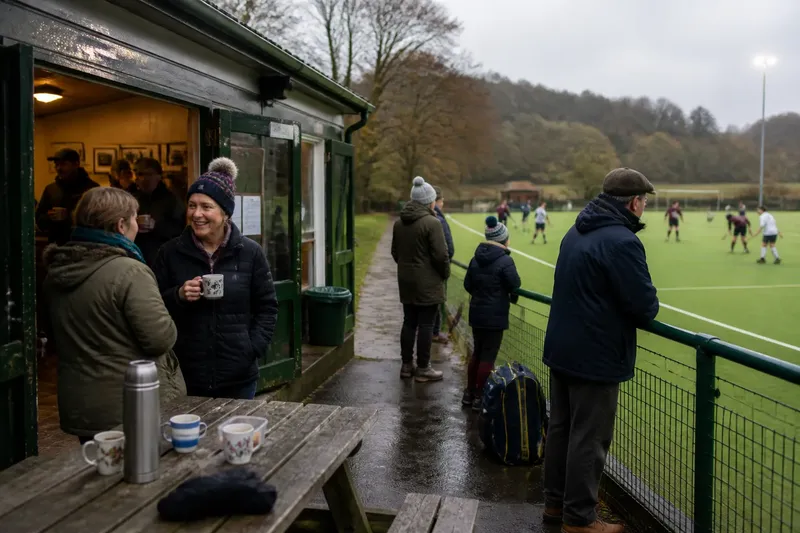
Imagine a village hockey club expecting a few visiting supporters on a damp afternoon. The organiser leaves the pavilion door open, places a simple welcome note inside, and asks one member to greet arrivals there while another points latecomers towards the covered viewing edge. The likely result is that visitors have a clear first contact, yet nobody is required to gather indoors before watching. This is an adaptable arrangement, not a promise that every guest will prefer the same welcome.
It is not worth building an elaborate rota or inventing a ceremony for a small fixture. A clear sign, a familiar face and an understood route between room and ground usually do more than a complicated plan.
5. How can a club make either start feel natural?
Choose the starting point before the day, then communicate it in plain language. A notice can say, “Tea in the pavilion before play; spectators welcome on the near touchline,” or “Meet by the touchline; the pavilion will be open at half-time.” That tells visitors what to expect while leaving them free to arrive in a different order.
- Name the welcome point. Say whether arrivals should look for someone in the pavilion or near the ground.
- Make the route obvious. Use a simple sign or a member who can point out the pavilion, viewing area and refreshments.
- Explain the timing. Let people know whether tea is available on arrival, during a break or after play.
- Leave room for different preferences. Do not treat staying indoors or going straight outside as a test of loyalty.
- Agree a handover. If the gathering begins in the pavilion, have someone invite people out when the fixture is about to start.
- Check comfort and access. Consider seating, shelter, the condition of the route and whether spectators can see the play.
Keep the message consistent across a club notice, a local social post and a word to visiting teams. It need not be polished; it needs to answer the questions a visitor might hesitate to ask. If the arrangement changes with the weather, say so rather than letting arrivals discover it by trial and error.
6. What should a club do when the day does not follow plan?
Weather and fixture timing can overturn a neat arrangement. If rain arrives, the pavilion may become the obvious first stop even for a touchline-first gathering. If play starts late, people may drift indoors or split into smaller groups. A flexible welcome handles this without treating a change of plan as a failure.
Give one person the simple task of keeping arrivals informed. They can tell people where to wait, whether the match is delayed and where refreshments are available. If the club has no formal host, a member who knows the ground can fill that role naturally. The important part is that a newcomer does not have to ask several people the same question.
When some people are inside and others outside, connect the two spaces with a brief update or invitation. A call from the doorway, a visible notice, or a member walking between the pavilion and the touchline can make the gathering feel joined up. Avoid insisting that everyone move together; people may have good reasons to stay where they are.
7. Which approach should the club choose?
Choose pavilion first when the room is welcoming, refreshments are central to the gathering, or visitors would benefit from an easy point of arrival. Choose touchline first when the fixture is the main draw, people are likely to arrive close to play, or the outdoor space offers the clearest welcome. If conditions or access make either choice awkward, offer both routes and make them equally understandable.
The answer to “pavilion first or touchline first?” can change from one fixture to the next. What matters is whether people know where they can go, how to join the shared customs and what happens when the match begins. A small, well-signposted welcome often leaves more room for genuine conversation than a carefully staged one.
For the next fixture, pick one starting point and tell people what they will find there. Then notice where the gathering naturally divides: who stays for tea, who heads straight out and whether anyone seems unsure where to go. That observation gives the club a useful starting point for its next welcome, without turning a local match into an exercise in managing every moment.